Quick Answer
Pre remediation air testing identifies the type and concentration of mold spores in your indoor air and gives a baseline. Post remediation testing, also called clearance testing, verifies the work returned spore counts to levels comparable with outdoor air or an unaffected indoor control. Both samples should be collected by a third party when possible, and lab results should come from an accredited microbiology lab.
Pre-Remediation Air Testing: Setting the Baseline
Before any containment is built or drywall is opened, an air sample documents what is actually airborne in your home. This protects you in two ways: it confirms remediation is needed, and it gives the remediator a target to beat.
What Pre-Testing Measures
- Total spore count per cubic meter of air
- Specific genera present (Aspergillus, Penicillium, Stachybotrys, Cladosporium, others)
- Comparison between affected rooms and an outdoor control sample
- Comparison between affected rooms and an unaffected indoor control
- Presence of hyphal fragments suggesting active growth
When Pre-Testing Makes Sense
- Visible mold larger than 10 square feet
- Persistent musty odor with no obvious source
- Occupants with respiratory symptoms that improve away from home
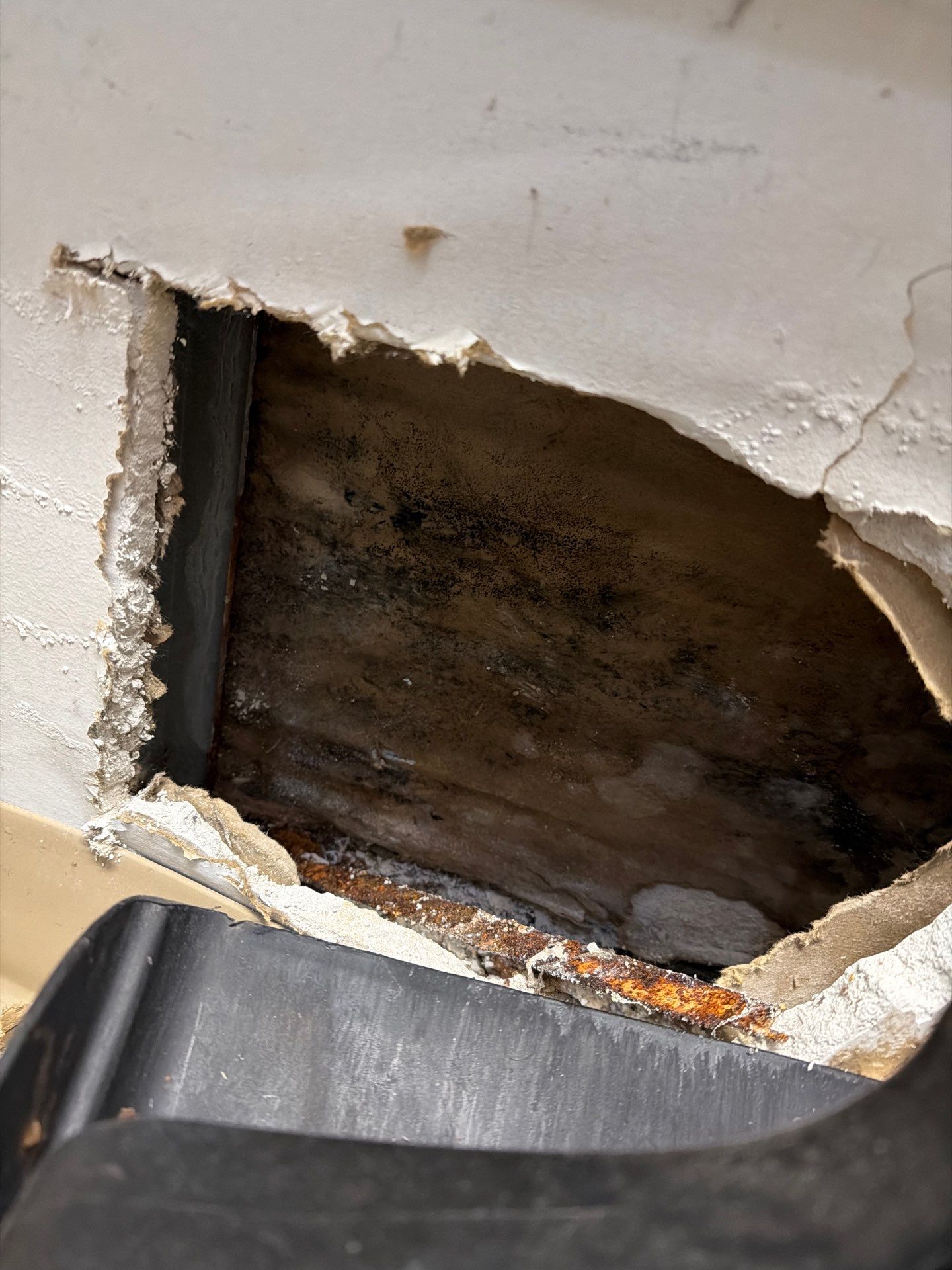
- After hidden water damage was discovered behind walls or under flooring
- Real estate transactions where documentation is needed
If you suspect the contamination started with an unaddressed leak, our guide on mold after water damage covers how moisture and spore growth are connected and why the 48 hour window matters.
Preparing Your Home for an Accurate Pre-Test
The 24 hours before a baseline sample matter more than most homeowners realize. Keep windows and exterior doors closed, avoid vacuuming or dusting, and turn off any portable air purifiers running HEPA media. Heavy activity stirs settled spores into the air and skews readings high, while running filtration scrubs them out and skews readings low. Either direction makes the baseline less useful when you compare it to clearance numbers later.
Cost Ranges for Air Testing in Albany
- Single room pre test with outdoor control: $300 to $500
- Whole house pre test (4 to 6 samples): $600 to $1,200
- Post remediation clearance (3 to 5 samples): $400 to $900
- Add on surface or tape lift samples: $50 to $100 each
- Re test after failed clearance: $200 to $500 depending on scope
Sample Types You May See on a Report
Spore Trap Samples
The most common method. Air is pulled through a cassette for five to ten minutes, spores stick to an adhesive slide, and a lab counts them under a microscope. Results return in two to five business days.
Culturable Samples
Air is impacted onto a growth plate. The lab incubates and identifies what grows. Slower and only catches viable spores, but useful when species identification matters.
Surface and Bulk Samples
Tape lifts or material chunks supplement air data. Helpful when you need to prove a specific patch is mold versus staining.
Post-Remediation Air Testing: Verifying Clearance
Post testing happens after the remediation crew has removed contaminated materials, HEPA vacuumed, wiped surfaces, and run air scrubbers, but before containment is taken down. The goal is simple: prove the work succeeded.
Clearance Criteria Used in Albany
- Indoor spore counts at or below outdoor counts for the same genera
- No Stachybotrys, Chaetomium, or Fusarium detected indoors when absent outdoors
- Visual inspection confirms no remaining visible growth
- Moisture readings on materials below 16 percent for wood, below 1 percent for drywall
- No musty odor inside containment
What Happens If Clearance Fails
A failed clearance is not a disaster, but it does mean the work is not done. Typical reasons include a missed pocket of growth behind a stud bay, settled dust that was not HEPA vacuumed a second time, or cross contamination from foot traffic in and out of the containment zone. Albany Water Restoration crews treat a failed clearance as a punch list: re clean affected surfaces, run scrubbers for another 24 to 48 hours, then resample. Most second tests pass when the first round identified a specific genera spike to chase down.
Pre vs Post Testing Comparison
| Factor | Pre-Remediation | Post-Remediation |
|---|---|---|
| Purpose | Confirm contamination and identify species | Verify cleanup returned air to normal |
| Timing | Before any demolition | After cleaning, before containment removal |
| Containment | Not yet built | Still in place during sampling |
| Air scrubbers | Off | Off for at least 24 hours before sample |
| Pass criteria | None, this is the baseline | Indoor counts at or below outdoor control |
| Who pays | Homeowner or insurance | Homeowner, sometimes split with contractor |
Common Mistakes That Skew Results
- Running air scrubbers during the sample period
- Opening windows or doors during collection
- Skipping the outdoor control sample
- Sampling the same day cleaning agents were applied
- Letting the same contractor who did remediation also collect clearance samples
- Taking samples right after heavy rain when outdoor counts spike artificially
- Sampling near HVAC supply registers that are actively running
When to Call Albany Water Restoration
If you have visible growth, a lingering musty smell, or a recent water loss, do not wait for symptoms to get worse. Albany Water Restoration dispatches assessment crews to Albany homes in most cases within 2 hours, and we coordinate independent third party testing so the clearance results stand up to insurance and real estate scrutiny. Keeping testing and remediation in separate hands is the single best step you can take to trust the final number on your report.
What the Lab Report Actually Tells You
A good report lists each sample location with raw spore counts, genera breakdown, and a comparison to the outdoor control. When you look at numbers, focus on ratios and genera rather than raw totals. A home reading 1,200 spores per cubic meter indoors with 3,500 outdoors of the same genera is typically fine. The same home reading 1,200 indoors with 200 outdoors, and most of those indoor spores being Aspergillus or Penicillium, suggests an active problem.
If readings come back elevated and you also have ongoing moisture issues, our team often recommends pairing testing with a moisture inspection. Hidden water sources keep feeding mold no matter how thoroughly you clean. The signs of hidden water damage writeup covers the indicators we look for during assessments, and our water damage restoration service handles the source repair when needed.