Phone Answered 24/7 · Albany Water Damage
When water hits your floors at 2 AM, Albany Water Restoration delivers fast, around the clock emergency water damage restoration across Albany, from burst pipes and sewage backups to basement flooding and storm intrusion. Our IICRC certified crews handle every phase from extraction through reconstruction, and we coordinate directly with your insurance carrier.
If we're busy helping someone else and miss your call, we'll call you back within 15 minutes.


Albany Water Restoration restores Albany homes after water damage: emergency extraction, flooded basement recovery, sewage backup cleanup, and monitored drying to verified standards, all documented for insurance. Available 24/7 at (812) 515-1567.
- Services: water damage restoration, basement flooding, sewage cleanup, storm damage
- Service area: Albany, Delaware County, IN and surrounding areas
- Response time: Same day for Albany inquiries; 24/7 emergency service available
- Licensed and insured (License #RC21100059)
- Serving Albany, IN since 2018
Schedule Your Free Damage Assessment
Every inspection we run in Albany starts with a room by room walkthrough, because water travels along framing and gravity, not in straight lines. We measure walls with non penetrating meters at multiple heights, then confirm suspicious readings with a penetrating pin meter at the baseboard, trim, and subfloor levels. Thermal imaging maps cold spots behind drywall and under flooring where moisture is hiding, and a hygrometer logs ambient temperature and humidity to set drying targets. We pull insulation in suspect cavities, check behind cabinets, under sinks, around water heaters and washing machines, and across basement perimeters and slab joints. The reason Albany homeowners get a thorough map up front is simple: hidden moisture is what fuels the mold call 30 days later, and finding it on day one is far cheaper than finding it after the drywall is back up.
I agree to be contacted by Albany Water Restoration regarding my inquiry.
Ceiling water damage in Albany means the problem is upstairs and moving. Roof leaks, overflowed tubs, and failed supply lines travel through framing before they show below. Finding and stopping the source, then drying the cavity properly, is what separates repair from repeat.
Water hitting your Albany home right now? Crews on-call 24/7. Truck-mounted extraction, commercial drying, full insurance documentation.
A free water damage inspection answers the question every Albany homeowner asks after the shock: how bad is it really? Moisture readings, photos, and a written scope, before any commitment, is how that answer should arrive. Pressure is not part of the process.
Payment Options That Work for You
A water or fire loss is rarely a planned expense. Our lender partners offer terms that fit a range of budgets so you can move forward while insurance settles. Ask Albany Water Restoration for current rates.
Pay for your project at a later time, but lock in today's pricing. Ideal for homeowners waiting on insurance settlements.
- No payments for 12 months
- No interest if paid in full
- Lock in current pricing today
Divide your project cost equally across 12 months with zero interest. Most homeowners choose this option for predictable budgeting.
- Equal monthly payments
- 0% interest for 12 months
- Simple, predictable budgeting
Spread your investment over up to 20 years with fixed equal payments. The right choice for larger projects or homeowners who prefer lower monthly amounts.
- Up to 20-year terms available
- Fixed equal payments
- Ideal for larger projects
Financing provided by Regions, Foundation Finance, Slice. Subject to credit approval. Rates, terms, and promotional periods are set by the lender and disclosed in writing before you sign.
From Inspection to Final Walkthrough
From emergency response to full reconstruction, Albany Water Restoration handles every restoration project with IICRC-certified crews and clear documentation.
Water Damage Restoration in Albany
Serving Albany: full residential water damage restoration covering extraction, structural drying, antimicrobial treatment, and reconstruction for losses ranging from minor leaks to whole home flooding. Each job is documented and dried to the IICRC S500 verified standard.
Learn moreBasement Flooding in Albany
For Albany addresses, basement flood response for groundwater intrusion, sump pump failures, foundation seepage, and broken supply lines below grade. We extract standing water, dry the slab and wall assemblies, and treat affected materials before any rebuild begins.
Learn moreSewage Cleanup in Albany
Serving Albany: category 3 black water cleanup for sewage backups, septic overflow, and contaminated water events. Work includes full containment, removal and disposal of porous materials, antimicrobial treatment, and post remediation verification per IICRC protocols.
Learn moreStorm Damage in Albany
In Albany, water damage restoration following storm driven intrusion, wind driven rain, and flooding caused by severe weather. We extract, dry, and rebuild the affected interior, working from the documented scope of loss your insurance carrier needs.
Learn moreCommercial Water Restoration in Albany
For Albany addresses, water damage restoration for offices, retail spaces, medical facilities, and multi tenant properties, with after hours scheduling and containment that lets the unaffected portion of the building keep operating where possible.
Learn moreCommercial Flood Damage Cleanup in Albany
For Albany addresses, large loss flood cleanup for commercial properties, including bulk water extraction, contents pack out coordination, and structural drying across larger footprints with the equipment capacity those losses require.
Learn moreCommercial Sewage Cleanup in Albany
Serving Albany: commercial Category 3 cleanup for sewer line failures, backflow events, and contaminated water releases inside commercial buildings, performed under full containment and IICRC S500 protocol.
Learn moreCommercial Mold Remediation in Albany
For Albany addresses, mold remediation for commercial properties performed under IICRC S520, including containment, HEPA filtration, removal of affected materials, antimicrobial treatment, and clearance verification before the space is returned to use.
Learn moreCommercial Storm Damage in Albany
In Albany, commercial storm damage restoration covering water intrusion from severe weather events, with documentation built for commercial insurance claims and scheduling that minimizes operational disruption.
Learn more
Local Expertise, Real Results
Restoration is the only work we do, and that focus is what Albany homeowners hear in the first phone call.
Albany homeowners call Albany Water Restoration for water damage restoration because the work runs the way it should. Local crews. Documentation that supports insurance claims. Schedule reliability. Closeout in writing. The standards Aaron Christy set when founding the company in 2018.
Albany Water Restoration serves Albany homeowners and property owners across Delaware County, responding to water emergencies in town and throughout neighboring communities like Eaton, Gaston, Selma, Yorktown, Muncie, and Portland. Restoration is the only work we do, which means the technicians dispatched to Albany arrive with focused experience in water extraction, structural drying, mold remediation, and rebuild. Our crews are IICRC certified, licensed, and insured, with training built specifically around the failure patterns common in older Midwest housing. We answer the phone day or night because water damage in Albany rarely waits for business hours, and the first few hours of response shape the entire cost and timeline of a claim.
Our methodology follows the IICRC S500 standard for water damage restoration, the published industry protocol that defines how Category 1, 2, and 3 losses are handled from assessment through clearance. For any mold remediation work, we follow IICRC S520, which governs containment, removal, and verification. On every Albany job, that means an initial moisture assessment with thermal imaging and calibrated meters, controlled extraction, structural drying with monitored airflow and dehumidification, antimicrobial application where contamination warrants it, and post drying verification before reconstruction starts. The standards exist because water hides, and finishing a job that looks dry but is not is how mold takes hold a month later.
Our Promise
Three things you can count on from Albany Water Restoration when water damage hits your Albany home. First, fast emergency response dispatched day or night, with crews equipped to start extraction on arrival. Second, IICRC certified technicians trained to the S500 standard, working under a licensed and insured company. Third, a free on site inspection before any work begins, and full coordination with your insurance carrier if you have an active claim. Plain talk, written scope, and a crew that finishes what it starts.
Why the Documentation Matters in Albany
IICRC certified crews, full scope from extraction through reconstruction, and clear written pricing on every Albany water damage project we take on.
Fast Emergency Dispatch
Water damage in Albany doubles in cost for every hour extraction is delayed. Our 24 7 emergency line stays open through nights, weekends, and holidays, and crews are dispatched with extraction equipment already loaded on the truck. You get a certified technician on site quickly, not a sales appointment three days out.
IICRC S500 Trained
Our technicians hold IICRC certifications and work to the S500 standard, the published protocol for water damage restoration. In practice that means proper Category determination, documented moisture readings, and drying to a verified standard, not a visual guess. The certification is the difference between a dry surface and a dry structure.
Mitigation Through Rebuild
Most Albany water losses need more than extraction. We handle the full arc, from emergency response and structural drying through demolition, drywall, flooring, paint, and trim. One company on the project means fewer gaps between phases and a clearer line of accountability from first call to final walk through.
Insurance Coordination
We work with your insurance carrier and document the loss the way adjusters expect, photos and video before mitigation, written moisture maps, daily readings, and a scope justified to industry standard. That documentation is how claims process cleanly and how surprise denials get avoided.
Real Jobs. Real Results.
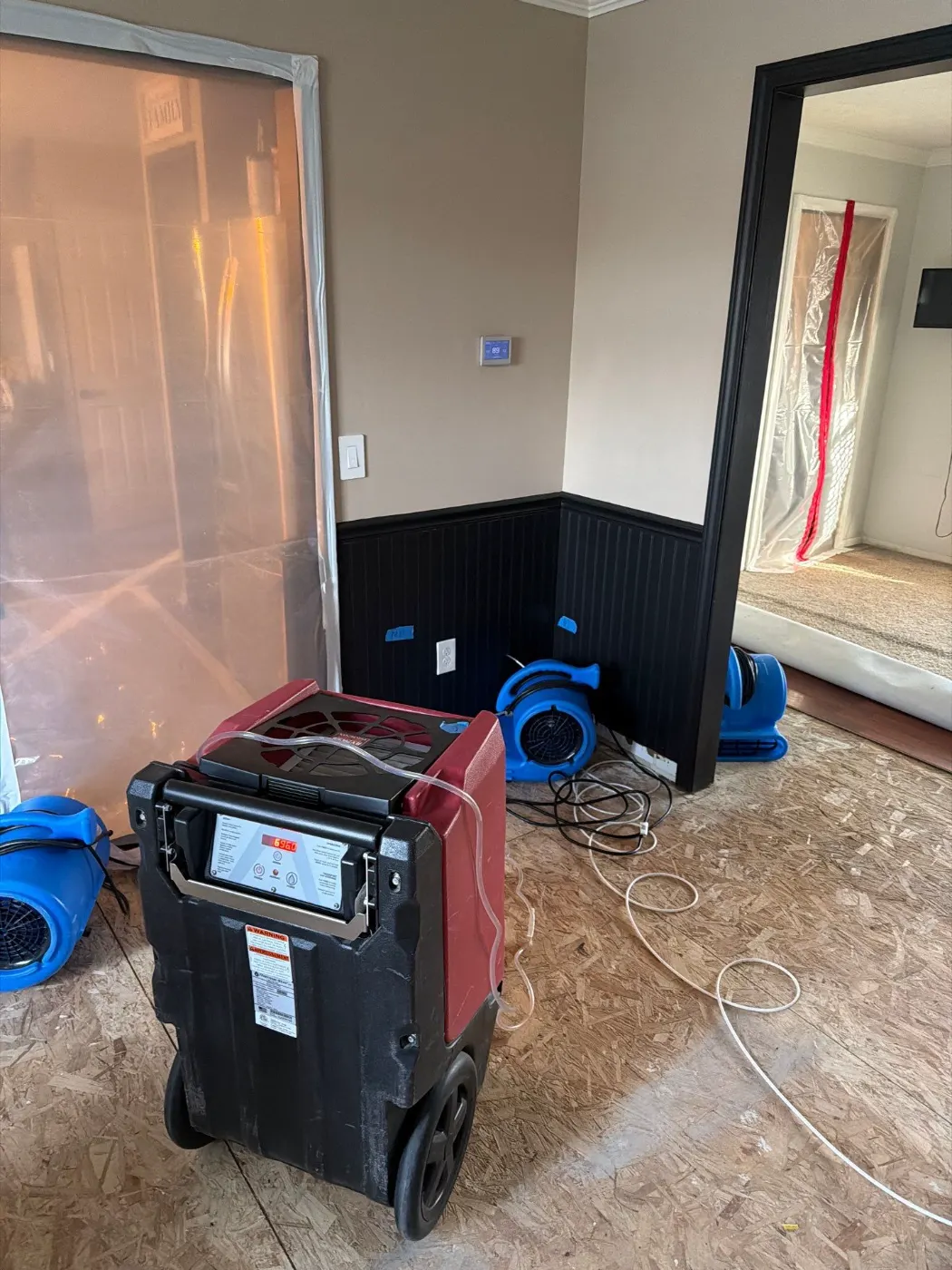
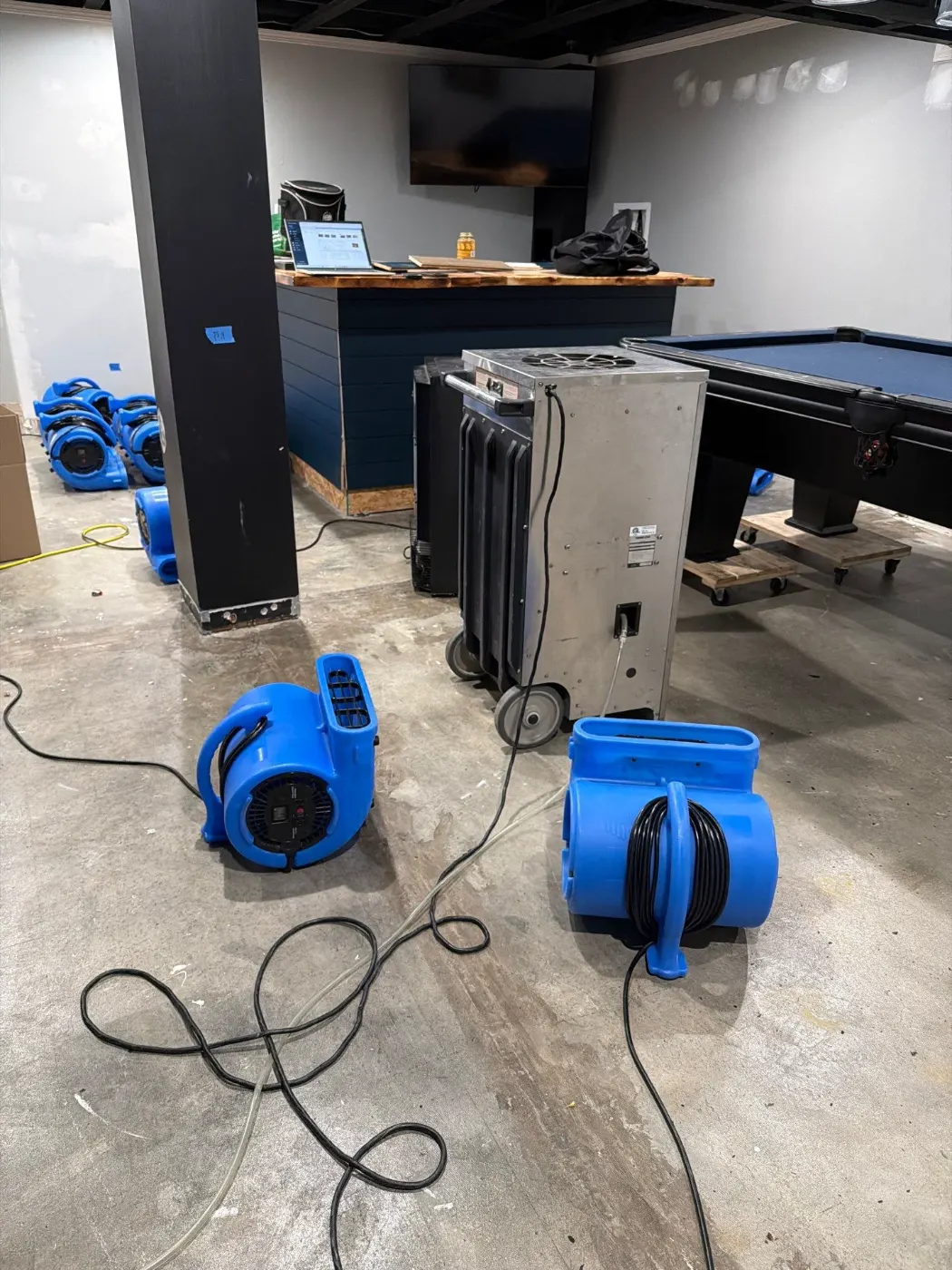
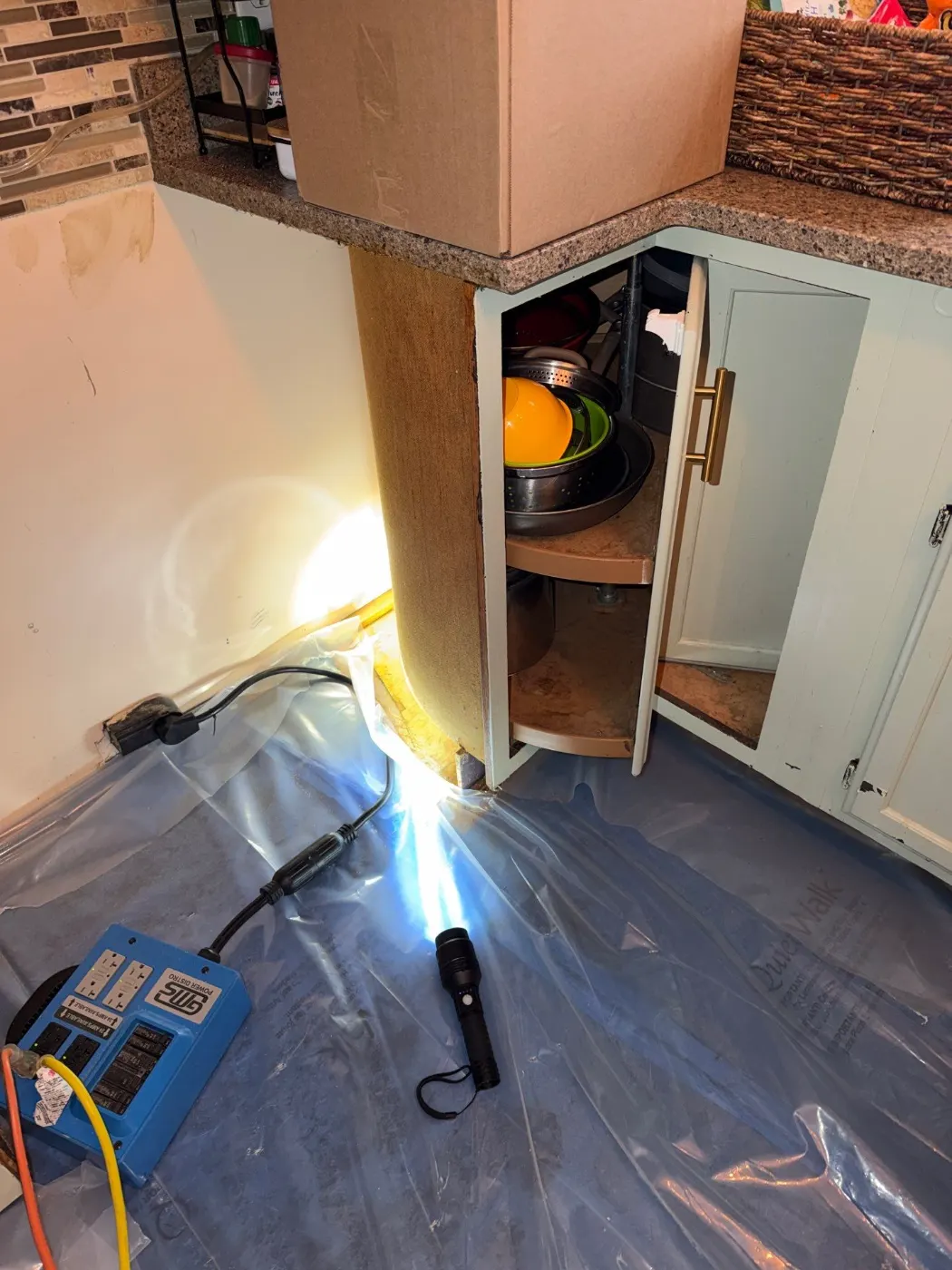
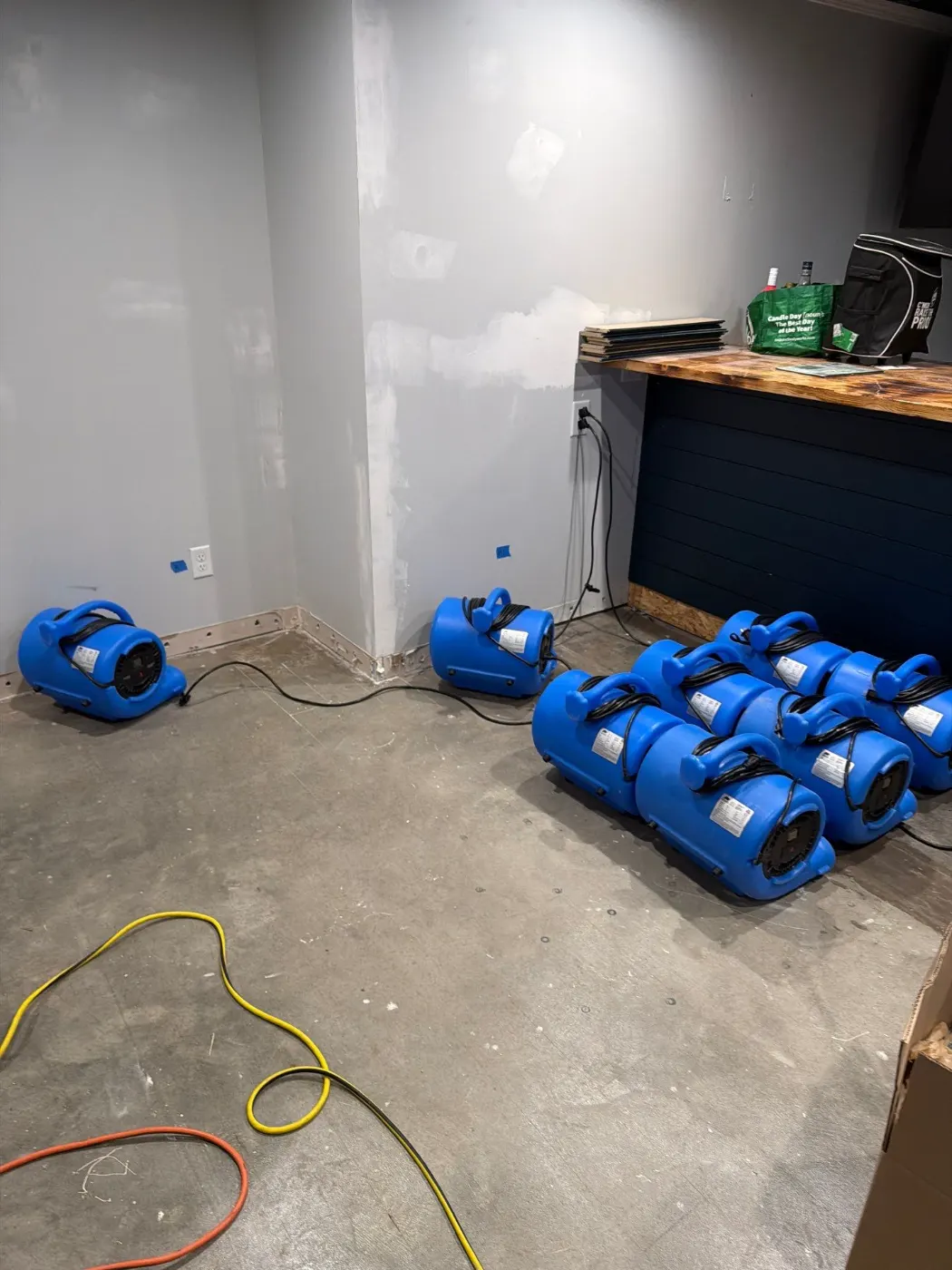
Recent water damage restoration projects across Albany and the wider Delaware County service area, from basement floods near the Mississinewa River corridor to burst pipe losses in older homes north of State Street.
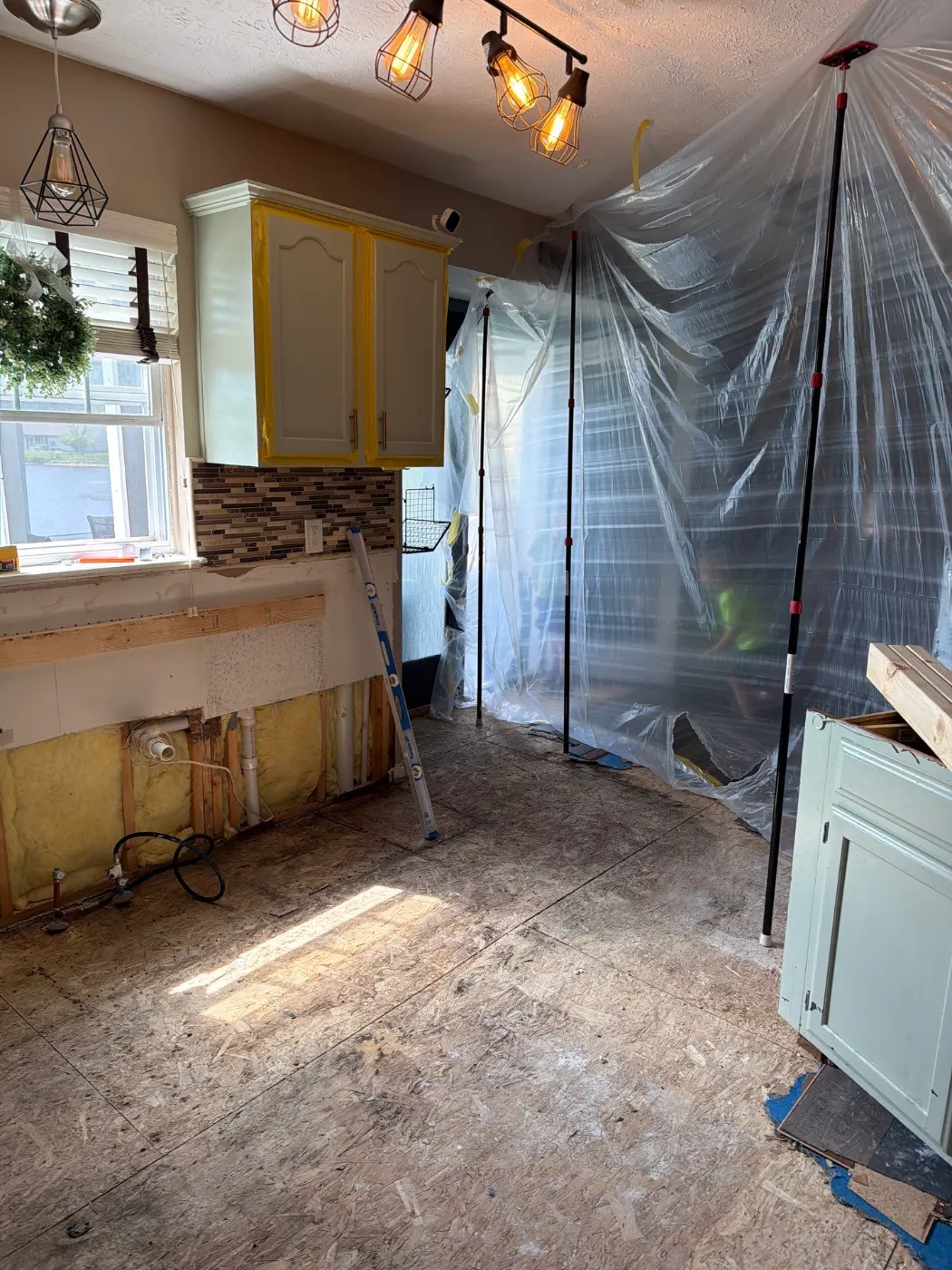
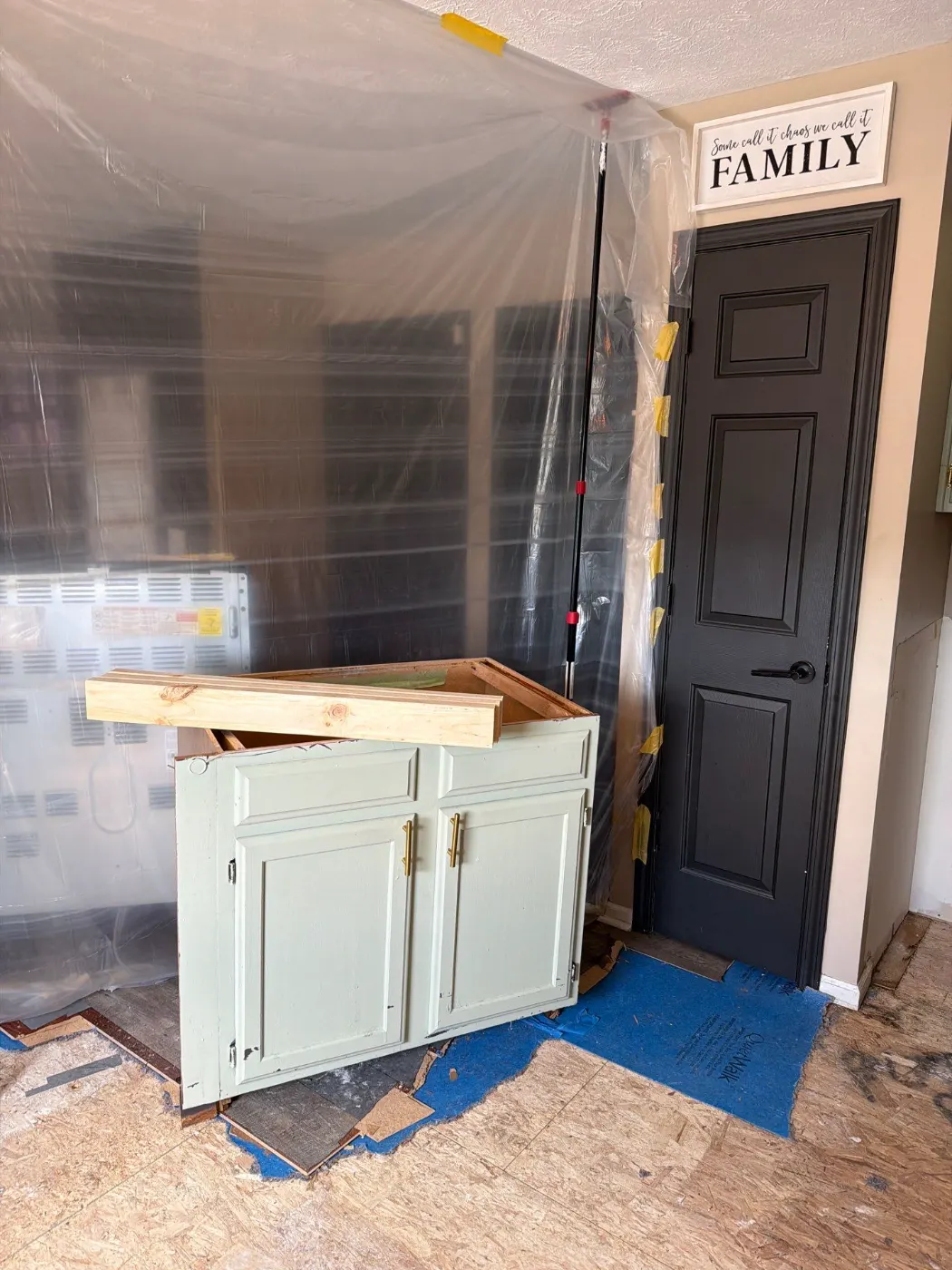
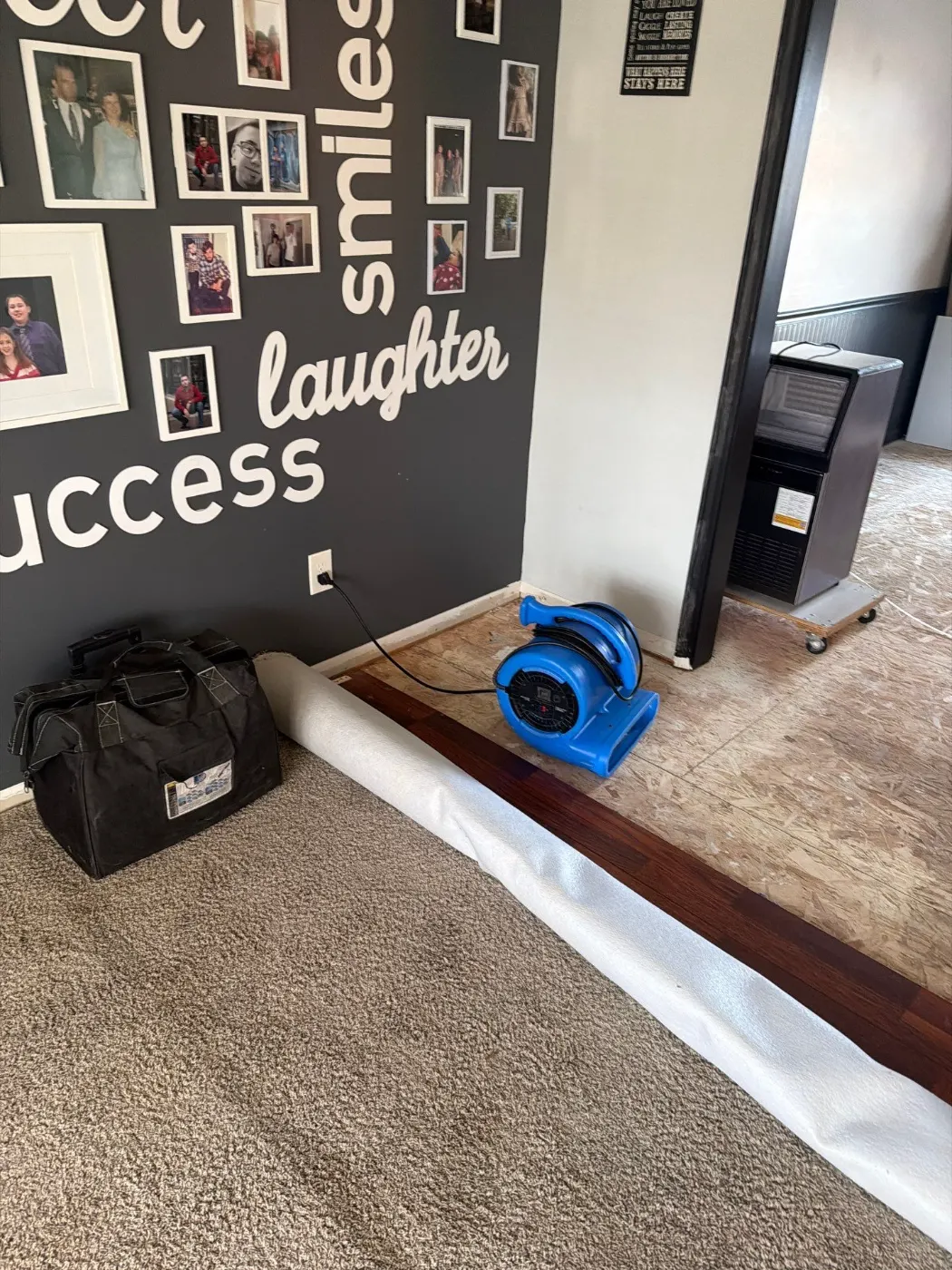
The Path From Albany Emergency to Closeout
Phase one is assessment. When our crew reaches your Albany home, the first step is a walkthrough with thermal imaging and moisture meters to map the affected area and identify the source, whether that is a broken supply line, an appliance failure, a sewage backup, or storm driven intrusion. We classify the water as Category 1, 2, or 3 per the IICRC S500 standard, because the category dictates everything that follows, from PPE to which materials can be dried in place versus removed. The full scope is documented before any drying equipment is staged, and this phase typically takes one to two hours.
Phase two is documentation and insurance coordination. Before mitigation begins, every affected area is photographed and videoed, and a written moisture map with logged meter readings is created. We make direct contact with your insurance adjuster, walk through the scope of loss, and match the mitigation plan to your coverage so the justification is on file from day one. For most Albany homeowners, this is the paperwork side of the job they never have to handle, we work with the carrier directly and keep you copied on the decisions that affect your home.
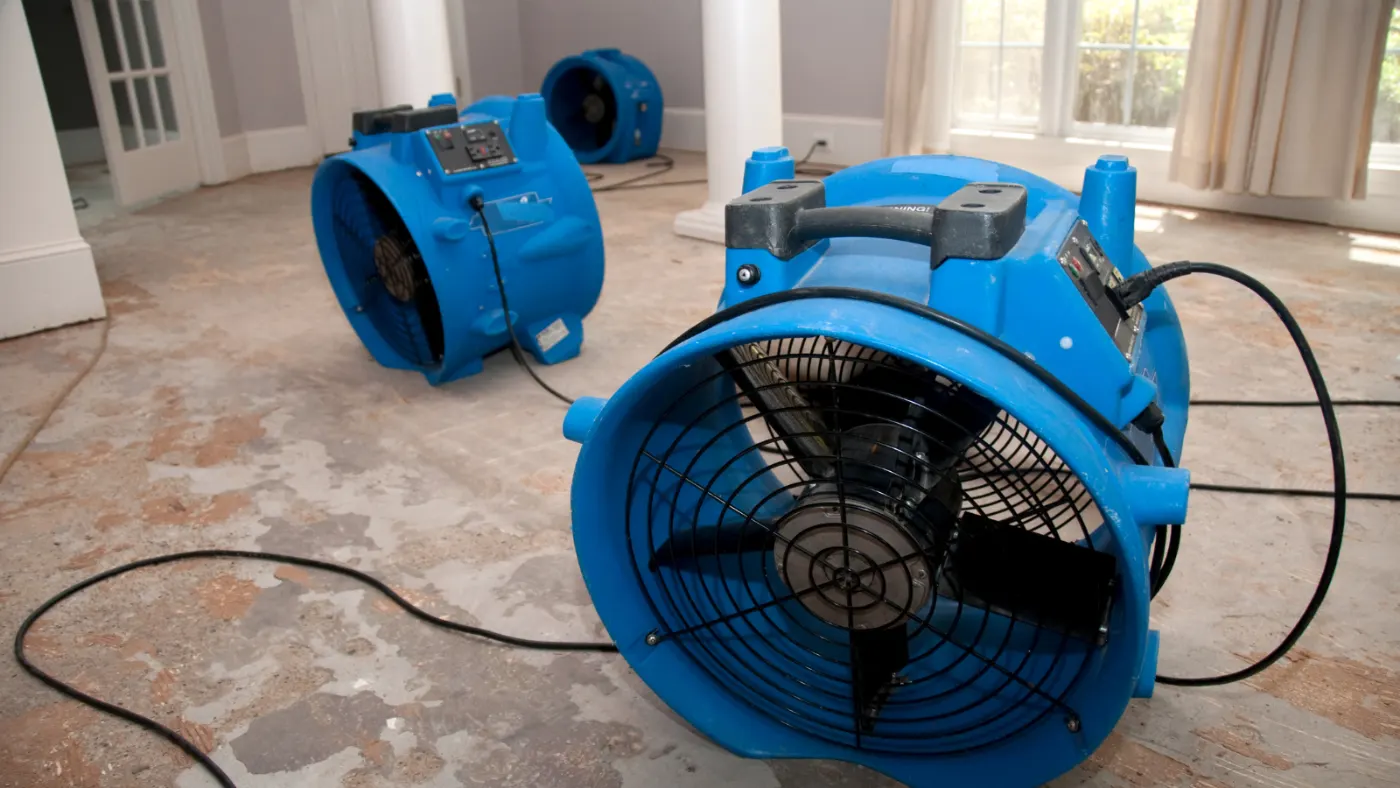
Phase three is drying and reconstruction. Air movers and commercial dehumidifiers are placed according to structural drying calculations sized to the affected square footage, and readings are logged daily until materials match the moisture content of unaffected structure. Controlled demolition happens only where wet materials cannot be dried in place. Then reconstruction takes over, drywall hung and finished, insulation replaced, flooring installed, trim and paint completed, so your Albany home leaves the project in the condition it was in before the loss.
Rapid on site Response
Our trucks roll with commercial water extraction equipment, dehumidifiers, professional air movers, thermal imaging, and moisture meters already loaded. A certified technician leads the crew, and extraction begins on arrival rather than after a second trip for gear. That speed is how Albany losses stay contained to the original footprint.
S500 Category Determination
Every loss is classified per IICRC S500, Cat 1 clean water from supply lines or appliances, Cat 2 gray water from dishwashers or toilet overflow without solids, Cat 3 black water from sewage, floodwater, or long standing groundwater. Meter readings get logged and a written assessment goes into the file before drying equipment is positioned.
Insurance Carrier Partnership
We work with your insurance carrier, not around it. Photo documentation, written scope, daily drying logs, and adjuster communication are part of the standard workflow. Scope is justified to industry protocol, and we walk the homeowner through any line item before it is added so there are transparent invoicing.
Verified Dry Standard
Drying is not finished when the surface feels dry. We monitor moisture content daily and confirm affected materials match unaffected ones before reconstruction starts. That verification step is what prevents the mold call six weeks later, and it is the part most Albany homeowners never see done correctly elsewhere.
Water Damage Sources in Albany
Albany homes typically call us about these six water damage scenarios.
Sump Pump Failure
The single most common call we get from Albany homeowners. Power outage during a storm, pump motor burns out, or the float switch fails. By the time you notice, the basement has 2 to 6 inches of water.
Slab Leak Under the Floor
A supply line under a slab can leak a long time before anything looks wrong. The early signs are a warm patch on the floor, a water bill that climbed for no reason, or one section of flooring that lifted while everything around it stayed flat.
Heavy Rain and Saturated Ground
Ground that has already taken a week of rain has nowhere to put the next storm. The water table comes up, pressure builds against the foundation, and it finds the cold joint, the tie holes, and the open block cores.
Toilet Supply Line Leaks
The plastic supply line under a toilet is one of the most failure-prone plumbing parts in the home. A pinhole leak running unnoticed for hours can drop 30 to 50 gallons through ceilings and floors.
HVAC Condensate Line and Pan
The secondary pan under an attic unit is a warning device, not a solution. If it is holding water, the primary line is already blocked. Albany homes find this out in July, usually as a brown ring spreading across a bedroom ceiling.
Fire Sprinkler Discharge
Freeze is the most common accidental discharge we see, usually in an unheated stairwell, attic, or unconditioned storage room. The head splits, the system charges it, and the building takes the flow until somebody closes the valve.
Three Simple Steps
From emergency call to job complete, we follow a disciplined IICRC-certified process on every Albany water restoration project.
Crew Dispatch
The first day decides what the invoice looks like. The equipment list is the same whether the loss is small or whole home. Live dispatch every hour of the year, with crews rolling within 2 hours.
Measure and Record
What gets found now is what does not surprise anyone later. Category determination and a written moisture map come before any drying plan. Nothing about the scope is a surprise to you or the carrier.
Restore the Home
An Albany dry out runs about 3 to 5 days, and the log proves when it is done. The walkthrough is where you sign off, not us. Extraction, dehumidification, sanitizing, and reconstruction under one company.
Albany Families on Our Work
4.9 stars across 2,006+ Google reviews.
"Mold remediation in a basement that had chronic moisture. They followed full S520 protocol, contained the area, used HEPA filtration, and tested after. Clearance confirmed by independent testing."
"Basement sewage backup. They were on-site fast, fully contained the affected area, removed contaminated materials, disinfected, and dried. Professional handling of a really unpleasant situation."
"Frozen pipe burst behind a bathroom wall. They were on-site fast, contained the damage, and dried the structure. Insurance adjuster commented on how thorough their documentation was."
"Washer hose burst and flooded the laundry room and into the garage. They responded fast, extracted, and dried. Insurance paid in full because the documentation was complete."
Indiana Weather Drives Restoration Calls Year Round
Indiana weather drives most water damage calls in Albany. Spring rains pool against foundations and push groundwater into basements, January cold snaps freeze and split aging supply lines in exterior walls, and summer thunderstorms send wind driven rain past window seals and storm damaged openings. Each pattern fails differently, and each needs a different response.
Spring Saturation Flooding
Albany sits along the Mississinewa River, and spring rains stack on top of snowmelt to push the water table up against foundation walls. Saturated soil finds its way through hairline cracks, cold joints, and around failed sump pumps, flooding basements from below. When we are called in, the first move is extraction and a moisture map across the basement perimeter and slab.
Winter Pipe Bursts
East-Central Indiana freeze thaw cycles run hard from November through March, and older Albany homes with original galvanized or early copper supply lines are the most exposed. A pipe in an exterior wall freezes overnight, splits, and dumps gallons per minute once the line thaws. We extract, contain the affected rooms, and start structural drying the same day to limit secondary damage.
Ice Dam Leaks
When attic heat melts roof snow and the runoff refreezes at the eave, water backs up under the roof line and finds its way into ceilings and exterior walls. The water shows up as a stain in a bedroom corner during a January thaw. Our role is the water side, drying the assembly, removing saturated insulation, and verifying the cavity is dry before close up.
Summer Storm Intrusion
Delaware County has logged repeat severe thunderstorm and tornado declarations, and the Albany area takes its share of wind driven rain that pushes water past window seals, sliding doors, and storm damaged openings. After the storm passes, we extract standing water, dry the wall and floor assemblies, and address any mold risk in cavities that stayed wet longer than 24 to 48 hours.
Water Restoration by Albany Neighborhood
Restoration projects completed across Albany's established and custom-home communities. Click any neighborhood for the specifics we have learned working there.
Where we respond near Albany
Indiana-licensed crews dispatched 24/7 to Albany and the closest surrounding communities.
Water damage response pricing in Albany
Albany water damage costs vary widely with category, square footage, and how long materials sat wet before extraction. The ranges below reflect typical Delaware County residential losses, and a free on site inspection produces the firm scope and price for your specific home.
Common Questions About Our Albany Work
Straight answers to the questions Albany homeowners ask most.
Expert Albany Restoration Crews Available Now
Water is spreading right now in your Albany home or business, and every hour without extraction expands the damage. Call Albany Water Restoration for fast emergency dispatch, a free on site inspection with no obligation, and a crew that works with your insurance carrier from the first photo to the final walk through.