Commercial Sewage Cleanup in Albany, IN
Commercial sewage emergencies in Albany answered at any hour, with inspections and documentation that stay in your file.
When Albany homeowners need Commercial Sewage Cleanup, Albany Water Restoration responds 24/7 with certified technicians, fast equipment deployment, and claim ready documentation. Call (812) 515-1567 for immediate dispatch.
- Service: Commercial Sewage Cleanup for Albany homeowners
- Service area: Albany, IN and surrounding areas
- Response time: 24/7 live dispatch; emergency crews prioritized for Albany
- Licensed and insured (License #RC21100059)
- Serving Albany, IN since 2018
Commercial Sewage Backup Cleanup in Albany
When sewage backs up in a commercial building in Albany, we'll contain the area so the rest of the building can keep working.
Sewer System Notes
Heavy rain can overload the sewer lines serving Albany and push sewage into lower levels. On the first walkthrough, we'll check where your building ties into the public sewer and whether it has a backflow valve.
We handle commercial sewage jobs anywhere in Albany, including the area near Albany Elementary School and Delta High School. We also handle commercial sewage backups in Portland, Muncie, Yorktown and Selma.
Commercial Sewage Cleanup for Albany Businesses
An overflow from a restroom in a retail space or a public lobby puts customers a few steps from the problem. Albany Water Restoration closes off the affected section with barriers and signage, then builds containment around it so Albany customers and staff stay on the clean side. The rest of the space can stay open where the layout allows, and your front desk team knows where the boundary sits.
Disinfectant can't work through a layer of soil, so Albany Water Restoration cleans before it treats. Crews scrub and rinse sealed floors, grout lines, floor sinks and trench drains, then apply an EPA registered antimicrobial at label dilution and hold it wet for the label's contact time. The product, the dilution and the timing go in your Albany job file.
Scheduling is part of the scope on commercial work. Albany Water Restoration works nights and weekends on Albany sewage jobs where the building's hours require it, and where only part of a space is affected, crews phase the work so the unaffected portion stays open behind a sealed barrier. What can be worked around gets worked around, and what can't gets explained before the crew starts.
Sewage losses draw more adjuster attention than clean water losses, mostly because the removal scope is larger. Albany Water Restoration expects the questions and documents the answers before they get asked: why the material was unsalvageable, what the moisture readings showed, which antimicrobial was applied at what dilution, and how long the dwell time ran. That record answers the obvious questions before anyone has to ask them.
A backup found on a Saturday or a holiday morning still needs a crew, and calls to Albany Water Restoration get answered on weekends and holidays for Albany commercial properties. Tell the dispatcher what you can see and which areas have to reopen first, and the crew plans containment around that.
Signs You Need Commercial Sewage Cleanup
If you notice any of these in your Albany building, schedule a free inspection before the issue worsens.
Water rising out of a floor drain when a kitchen line discharges
Odor that gets stronger the closer you walk to the lowest floor drain
Drain flies showing up around floor sinks, mop basins, or a kitchen hand sink
Sewer odor coming through HVAC supply registers in a space that has no plumbing in it
Kitchen drains running slow again soon after the grease interceptor was pumped
A lift station alarm that logged overnight with nobody on site to answer it
Staining on the flooring around the base of a toilet after an overflow
Sewer odor greeting tenants in a ground floor suite after a weekend closure
Odor returning days after a plumber cleared the line and declared it flowing
Water in a below grade storage room after the building ran heavy restroom or kitchen use
How Albany Water Restoration Handles Commercial Sewage Cleanup
We follow these steps in order on every Albany job.
Moisture Mapping and Cut Lines
Once the standing waste is out, meters and a thermal camera trace the wet edge across floors and walls. The crew marks cut lines on the walls from those readings and photographs each mark before demolition begins.
Antimicrobial Treatment
An EPA registered antimicrobial goes on at label dilution across the cleaned surfaces and the exposed structure, held wet for the contact time the label specifies. The product, the dilution, and the dwell time get written into the job file.
Structural Drying
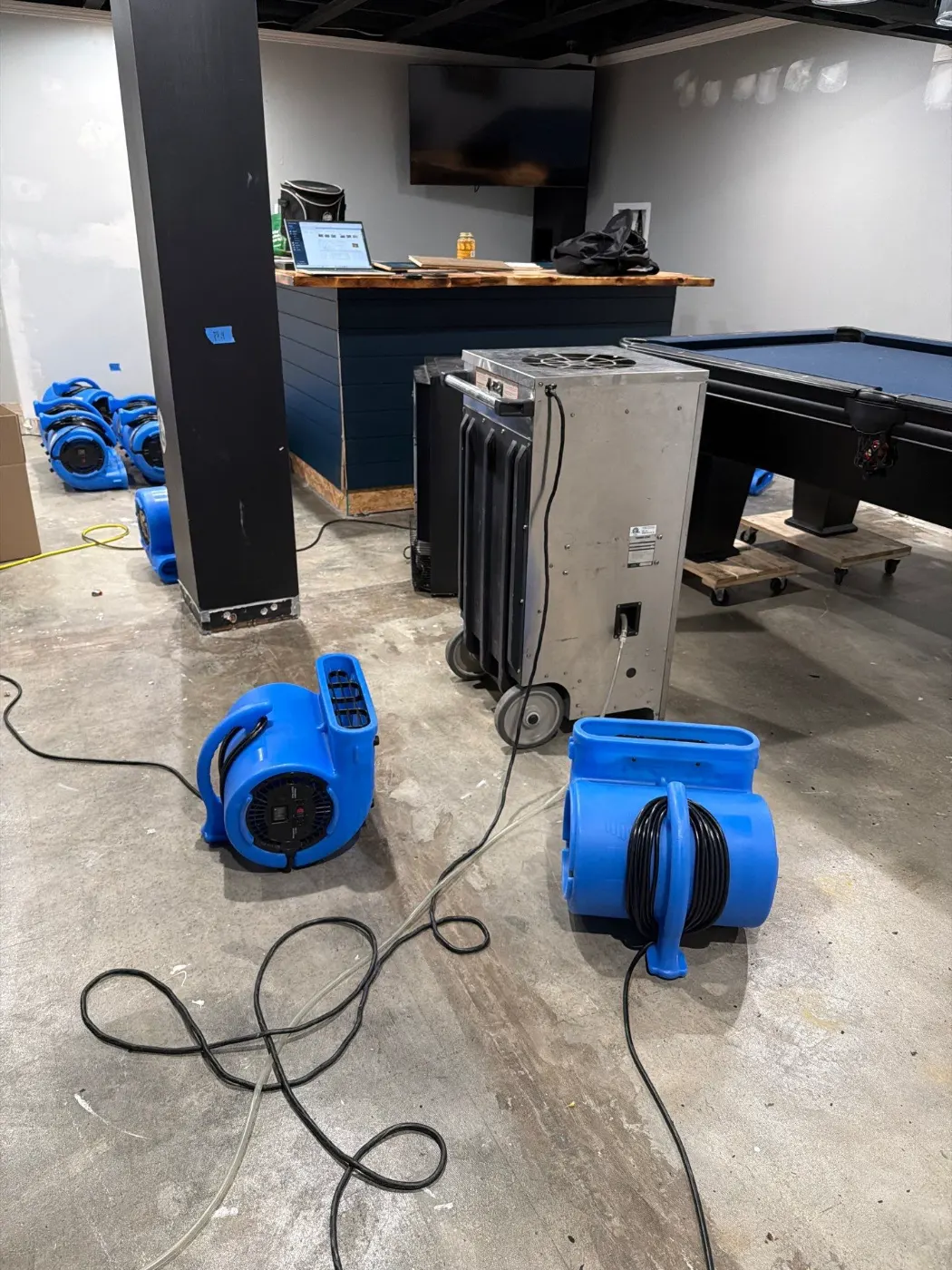
Air movers and dehumidifiers get sized to the affected volume and the amount of wet material, then placed around the wet zone. Moisture content is logged daily by material and location against unaffected baseline readings taken elsewhere in the same building.
Documentation Handoff
The finished file goes to the property manager in one package: photographs, moisture logs, antimicrobial product details, disposal records and the clearance readings. A copy stays with the building owner for the permanent record.
Repeat Prevention Review
After the space is released, the lead reviews the plumbing path with your maintenance staff and notes cleanout access and the interceptor service schedule. Those notes, with the location of any backwater valve, go to your plumber to review for line maintenance.
Commercial Sewage Cleanup in Albany
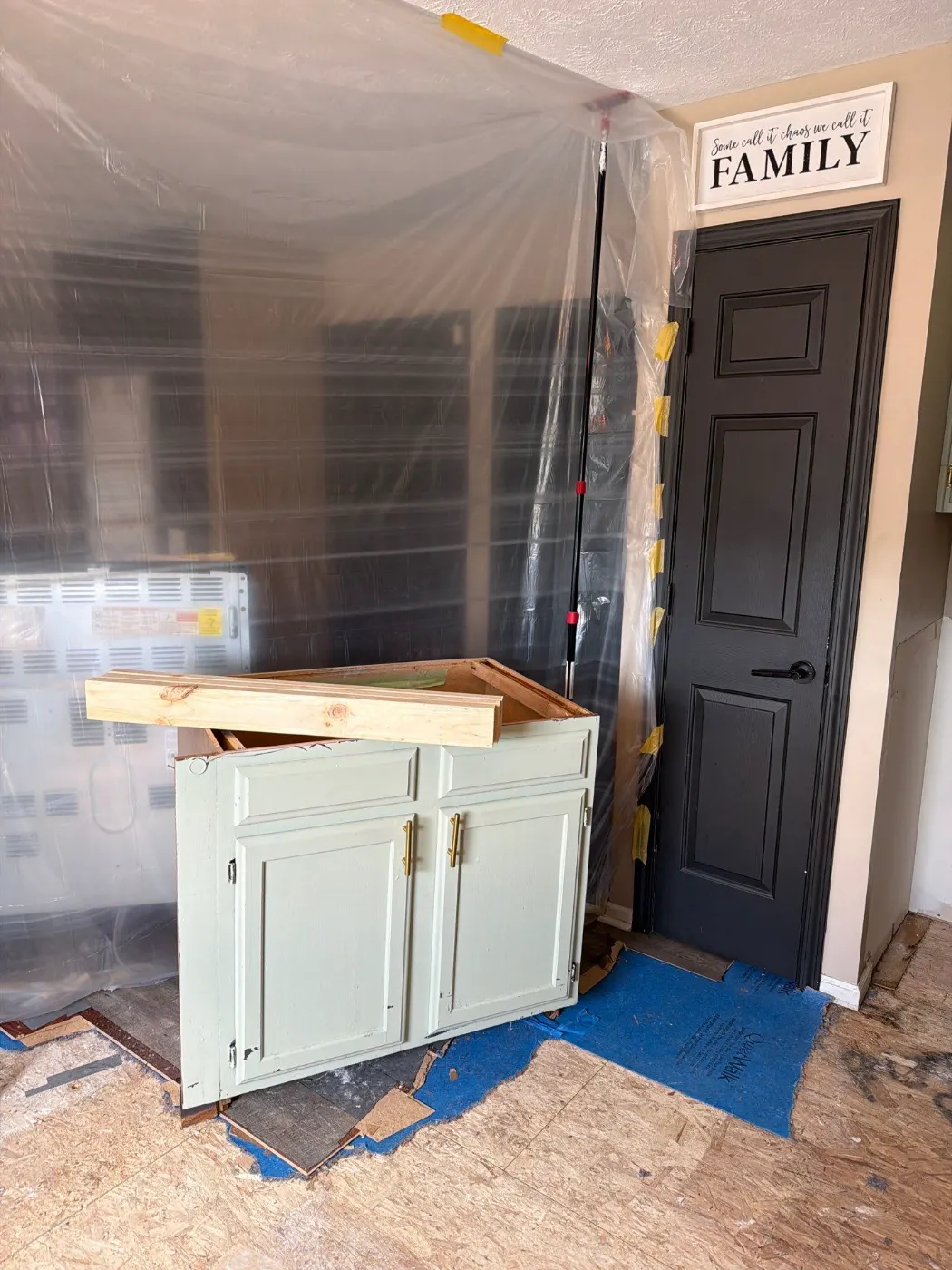
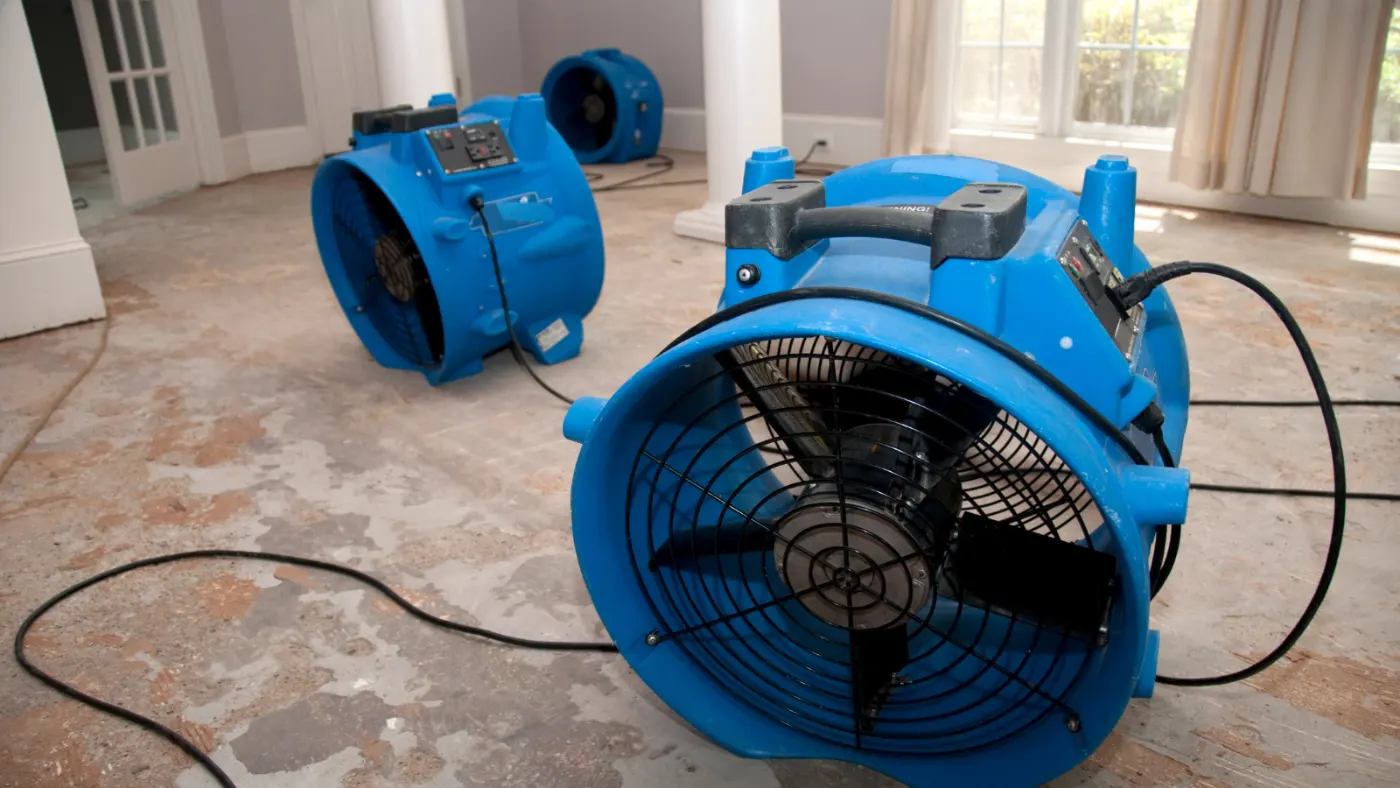
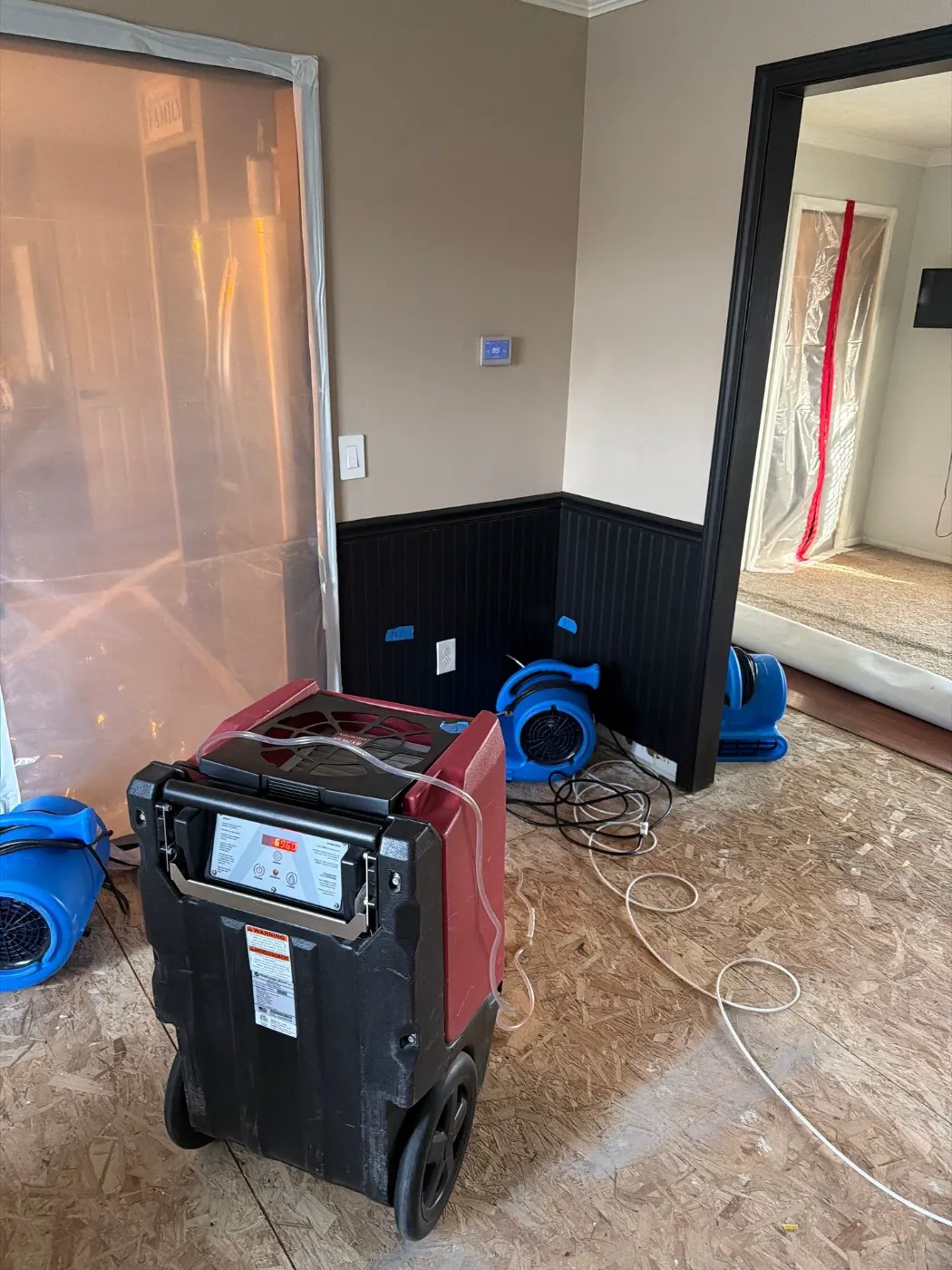
Photographs from real commercial sewage cleanup jobs completed by our crew in Albany and surrounding areas.
Commercial Sewage Cleanup FAQ
Questions Albany property managers ask us about commercial sewage cleanup.
Guidance and Standards for Commercial Sewage Cleanup
- The ANSI/IICRC S500 is the published standard for professional water damage restoration. The current edition is the Fifth Edition, 2021. IICRC S500 Standard
Albany Neighborhoods We Serve
We take commercial sewage cleanup calls in every part of Albany. Pick your neighborhood for local details.
Other Restoration Services in Albany
Albany Water Restoration handles the full scope of restoration work. Explore our other services below.
Water Damage Restoration in Albany
24/7 emergency response. IICRC certified water restoration from extraction to full dry out.
Learn more →Basement Flooding in Albany
Basement water emergencies handled fast. Extraction, drying, mold prevention.
Learn more →Sewage Cleanup in Albany
Category 3 biohazard cleanup. Full containment, decontamination, structural restoration.
Learn more →Request Commercial Sewage Cleanup
Reach Us Directly
Our team is available 24/7 for emergencies and ready to schedule inspections during business hours.
Need Immediate Help?
For active water or mold emergencies, call us directly. We are available 24/7.